



From our blogs to our newsletter and even sometimes on our socials, we reference Washington County’s history pretty frequently. What we don’t always get into are the historical people and events behind some of the most well-known attractions and events that happen here in Washington County. Read on for a breakdown on 7 key historical figures we think you need to know about.
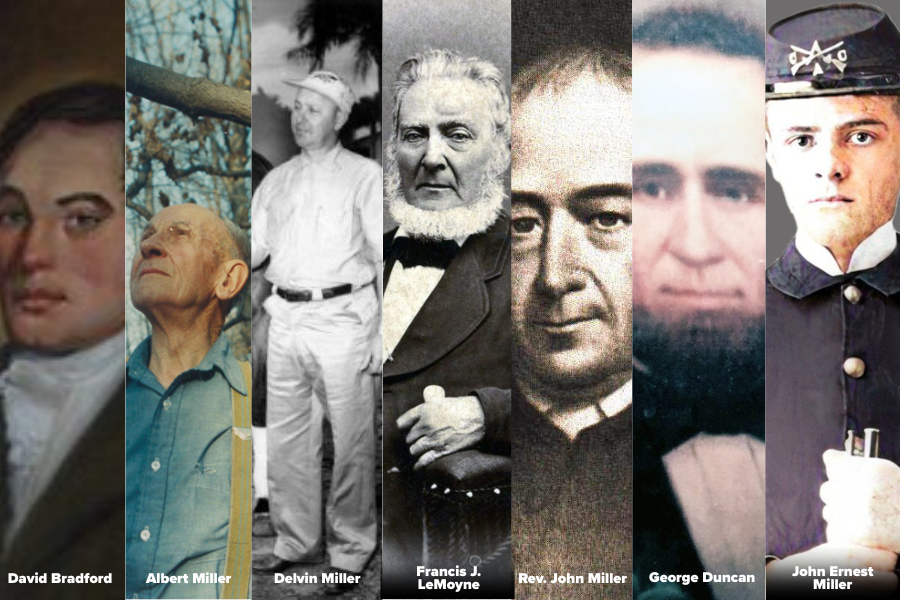
David Bradford
Back to Top of ListAn accomplished young attorney, David Bradford arrived from Maryland in the newly formed Washington County in 1782. After establishing a successful practice, he was appointed deputy attorney-general of Washington County the following year. In just two years, Bradford rose to high social status in the county, thanks in part to powerful family connections and his status as a trustee of Washington College, now known as Washington & Jefferson College.
By 1791, Bradford was becoming increasingly active in the county’s political landscape, particularly in an escalating protest over a federal whiskey tax. Intended to pay off debt from the Revolutionary War, this excise tax hit farmers in western Pennsylvania particularly hard, as whiskey was easier to transport and use as currency than raw crops like wheat, rye and corn.
Citizens eventually became so irate about the tax that, in July 1794, a force of 400 “whiskey rebels” attacked and destroyed the home of a tax inspector as part of the Whiskey Rebellion. The movement continued to grow larger and increasingly violent, with David Bradford and several other leaders at the helm as farmers continued attacking and intimidating federal officials. When peace efforts from the federal government failed, President George Washington himself led a force of 13,000 militiamen to quell the rebellion and enforce the tax. By the time Washington reached Washington County, however, the rebellion had collapsed, with most participants either surrendering or fleeing.
As for David Bradford – the government was not too eager to apprehend him, despite a warrant out for his arrest and a $500 bounty on his head. The rebellion leader rode to Pittsburgh, where he eventually made his way down the Ohio River and to freedom in St. Francisville, Louisiana, a Spanish territory at the time. After becoming a wealthy planter and being officially pardoned for his role in the rebellion, Bradford only returned to Washington County once to collect his family and officially sell his home.
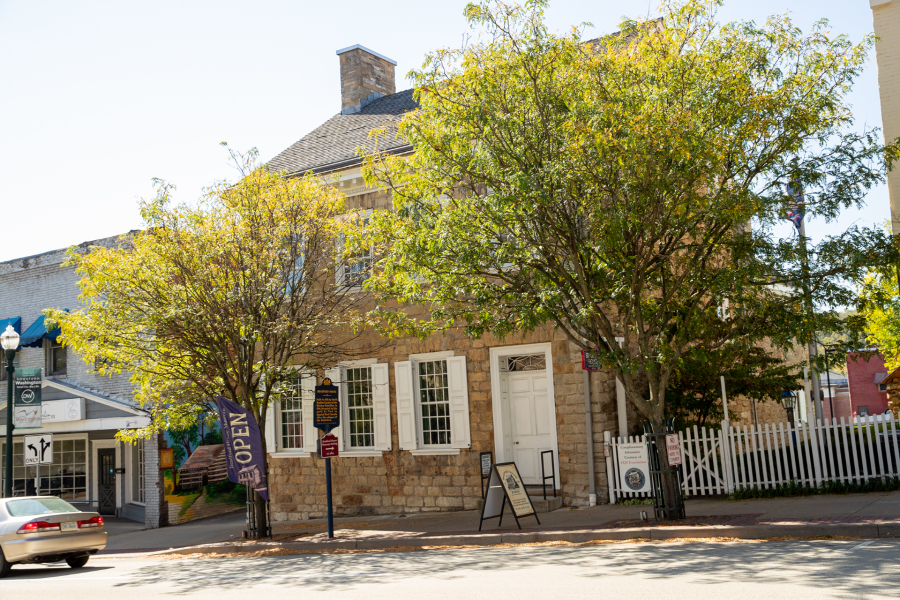
Today, the Bradford House still stands and is open to visitors as the Bradford House Museum, having been fully restored to its construction appearance from 1788 alongside an original well and a reconstructed outdoor kitchen, with furnishings and décor reflecting Bradford’s standing in society. The Whiskey Rebellion’s impact on Washington County is celebrated every year during the Whiskey Rebellion Festival.
Albert & Delvin Miller
Back to Top of ListThese two brothers founded two critical Washington County landmarks and one legendary event. Let’s start with Albert and the Meadowcroft Rockshelter & Historic Village.
In 1955, Albert Miller was walking his family farm in Avella when he stumbled upon a groundhog hole, and, among the turned-up earth, what looked to be a prehistoric tool. After further unearthing the tool, Miller chose to cover up the hole and spent the next two decades searching for an archaeologist to assess the historical significance of the site.
Enter Dr. James Adovasio of the University of Pittsburgh, who, in 1973, was so astonished by what turned out to be a prehistoric flint knife that he immediately assembled a team to begin excavating the site. Over the next six years, the site yielded over two million artifacts and ecofacts, including ancient stone tools, pottery fragments, and evidence of Ice Age fire pits.
The estimated date of the site? Nearly 19,000 years old. The story is almost unbelievable - that a simple groundhog hole atop a rocky overhang had led to the discovery of the oldest known site of human habitation in North America.
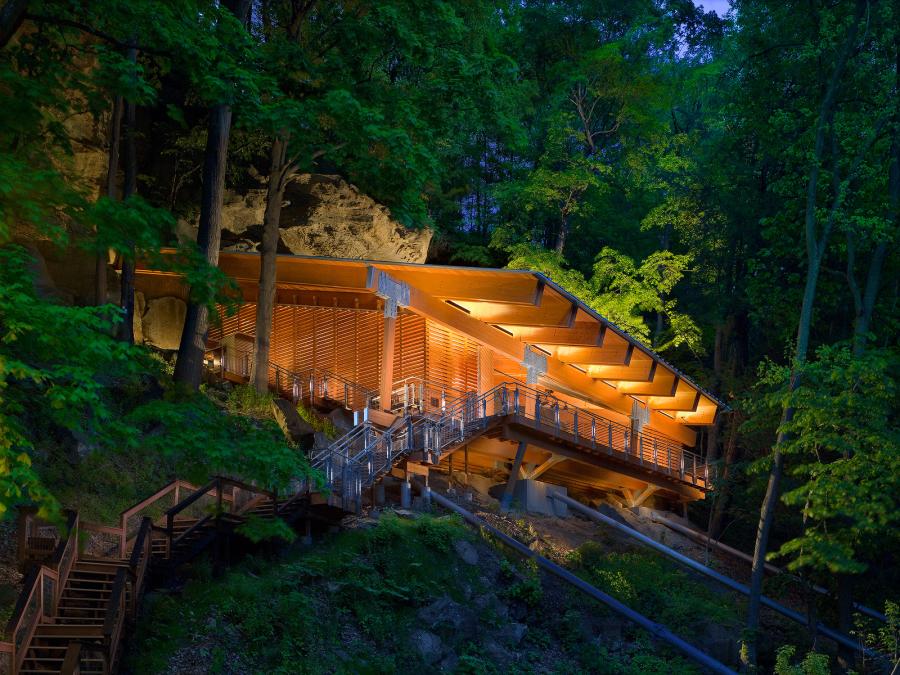
Prior to the beginning of excavation at the Rockshelter, Albert had enlisted the help of his brother to reclaim the land, save the historic Pine Bank Covered Bridge, relocate several historic buildings to the farm, and collect significant artifacts. Together, they combined the names of their two farms (Meadowlands and Bancroft) into Meadowcroft and officially established the Meadowcroft Rockshelter & Historic Village as a museum in 1969.
Today, Meadowcroft Rockshelter & Historic Village is part of the Heinz History Center, a National Historic Landmark, and is still an active archaeological dig site. In addition to the Rockshelter, the museum is home to a 16th-century Eastern Woodland Indian Village, an 18th-century log cabin and open-sided trading post, and a 19th-century historic village featuring a one-room schoolhouse and working blacksmith.
Now onto Delvin. While Albert had Bancroft Farm in Avella, Delvin’s land was called Meadow Lands Farm in, you guessed it, the Meadowlands in Washington. A legendary horse trainer, owner, and breeder, Delvin founded what would later become Hollywood Casino at the Meadows as The Meadows racetrack in June 1963. He is the only professional in any sport whose career spanned eight decades, winning a total of over 2,442 races and $11 million in winnings. He was officially inducted into the United States Harness Racing Hall of Fame in 1969.
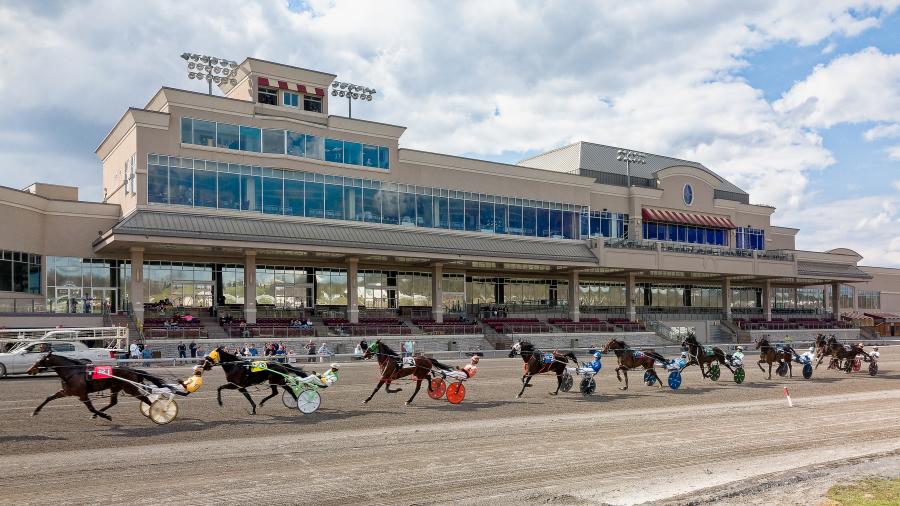
Beyond his career on the track, Delvin was also an accomplished breeder of harness racing horses. His most famous stallion, Adios, is the namesake of the Delvin Miller Adios Pace for the Orchids, harness racing’s biggest race that happens every year at Hollywood Casino at the Meadows.
Francis J. LeMoyne
Back to Top of ListJust around the corner from the Bradford House Museum in downtown Washington is another stately and famous home – that of Francis J. LeMoyne. Located at 49 E. Maiden St., this 1812 home is also a National Historic Landmark that served not just as the home of LeMoyne, but as a critical stop on the Underground Railroad.
A fierce abolitionist, LeMoyne was a member of the American Anti-Slavery Society and the Foreign Anti-Slavery Society, which led him to become increasingly active in the county’s political landscape. LeMoyne was involved in the Liberty Party and unsuccessfully ran for governor in 1841, 1845, and 1847, in which a contributing factor was his belief that once freed, enslaved people should have equal rights to white people.
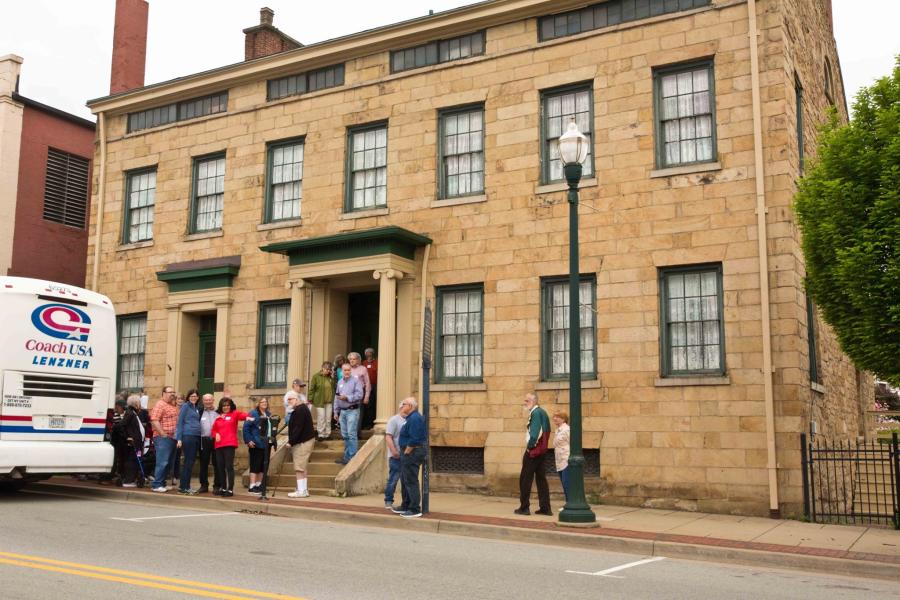
Beyond his political efforts, LeMoyne was also an accomplished physician, having graduated from Jefferson Medical College and the University of Pennsylvania School of Medicine. In the 1870s, LeMoyne set out to address a serious public health problem - he believed that decomposing bodies in local cemeteries were contaminating water supplies and making citizens sick. To combat the issue and to prevent further illness, the physician proposed a solution that was at the time viewed as morally unjust: cremation. He built the nation’s very first crematorium on his own land in 1876. In total, 41 cremations were performed at the LeMoyne Crematorium, including LeMoyne’s own when he died in 1879.
Francis J. LeMoyne is one of the most famous citizens in Washington County for a reason. Beyond his efforts as an abolitionist and a physician, he also founded the Citizens Library, co-founded the Washington Female Seminary, and was a major benefactor in the construction of a school for freed enslaved people in Memphis, Tennessee, known today as LeMoyne-Owen College.
Rev. John McMillan
Back to Top of ListAnyone familiar with Washington & Jefferson College knows the name Rev. John McMillan. The namesake of the college’s oldest hall (the eighth-oldest academic building in the United States), John McMillan was instrumental in founding W&J, though at the time the college was very different than what it is today.
After arriving in Washington County following the Revolutionary War, McMillan began teaching students Greek and Latin in his log cabin in Canonsburg. The building doubled as a stable when classes were not in session. John McMillan’s Log School eventually became the Canonsburg Academy, where the curriculum expanded to teach young men math, grammar, rhetoric, natural history, and Presbyterian ministry.
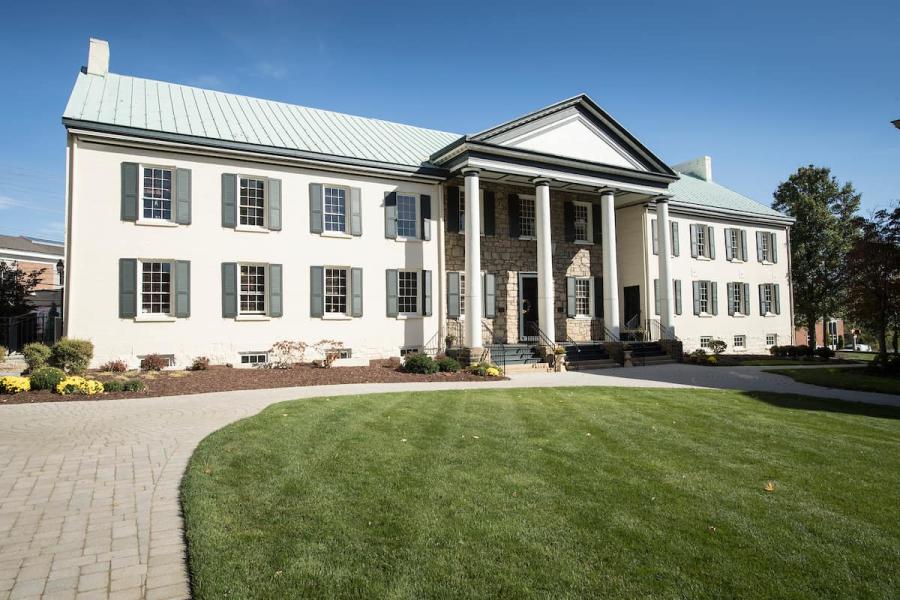
The building was eventually relocated to its place in front of Jefferson College following the academy’s reconstitution into the college. Following the Civil War, in which Jefferson College and nearby Washington College suffered student and funding shortages, the two colleges merged to officially form Washington & Jefferson College.
McMillan Hall was built on W&J’s current campus in 1793 and is on the National Register of Historic Places. As the college has evolved, the hall has undergone many rounds of changes and remodeling, having served as a dormitory, dining hall, library, and administrative offices. Today, it’s home to the president’s office, the Office of Communications, and both the Alumni and Development offices. Fun fact: the hall is rumored to be haunted, with students report seeing the ghost of a girl named Abigail and even John McMillan himself roaming the halls of the building.
George Duncan & John Ernest Miller
Back to Top of ListLong before Western Pennsylvania was synonymous with steel, it was the glass manufacturing capital of the country. At the absolute pinnacle of that industry was the Duncan & Miller Glass Company, a firm globally renowned for producing what was widely considered the “loveliest glass in America”.
The company's roots trace back to 1865, when George Duncan purchased an existing glass factory on Pittsburgh’s South Side. Seeking to expand, Duncan brought on John Ernest Miller in 1874 as a lead glass designer. It proved to be a genius move; Miller’s innovative, internationally celebrated designs would steer the company’s creative vision for more than half a century.
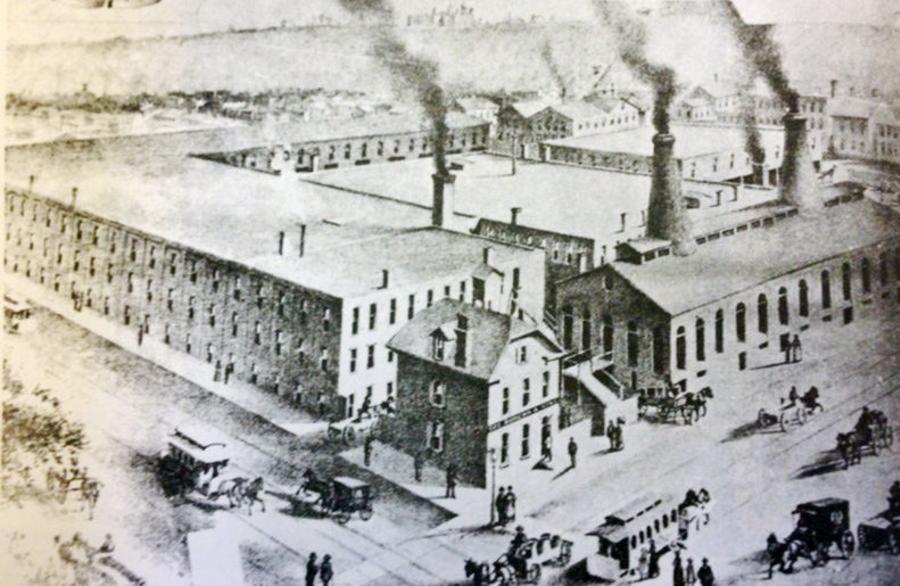
Disaster struck in 1892 when a devastating fire destroyed their Pittsburgh facility. Looking for a fresh start, the Duncan family and Miller relocated operations down to Washington County, drawn by the area's robust railroad access and an abundance of inexpensive local natural gas to fuel their furnaces. By 1900, the firm officially incorporated as the Duncan & Miller Glass Company, formalizing Miller’s status as a full partner and stockholder.
While competitors focused on automated, mass-produced glassware, Duncan and Miller doubled down on exquisite, hand-sculpted artistry. At its height, single pieces of their famous colored glass and vibrant Art Deco tableware could require up to 14 master craftsmen to complete. Though economic pressures from automated factories finally forced the plant to close in 1955, their dazzling industrial legacy is preserved just blocks from the original factory site at the Duncan & Miller Glass Museum on Ridge Avenue.

